Losing weight after 50 isn’t just about eating less. If you’ve noticed the scale barely moves despite doing everything you used to do, you’re not imagining it. After age 50, your metabolism slows, muscle mass naturally declines, and hormone changes make your body store fat differently.
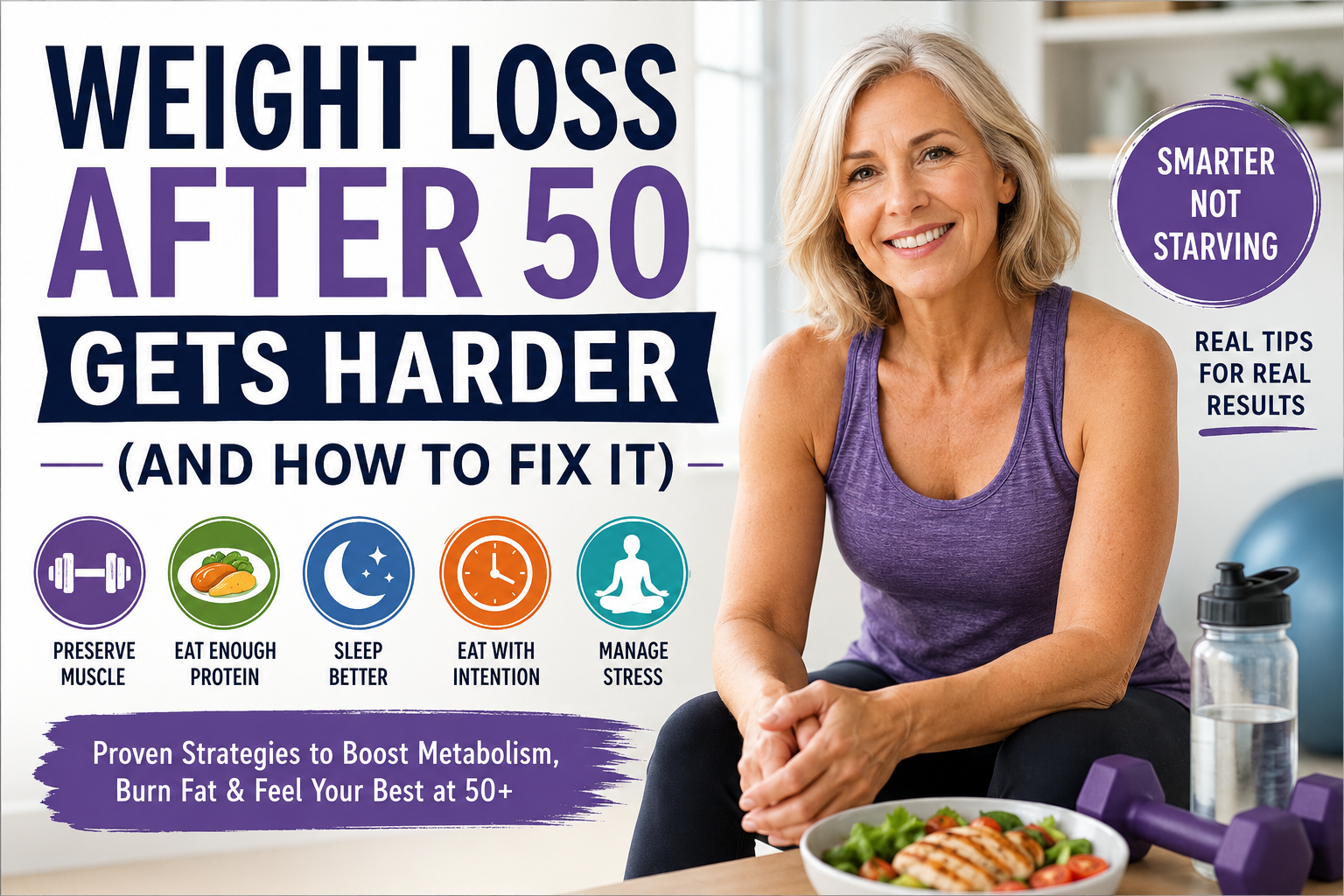
The good news is this: once you understand what has changed, you can work with your body instead of fighting it. The best weight loss after 50 tips focus less on crash dieting and more on preserving muscle, eating enough protein, improving sleep, managing stress, and creating simple routines that support your changing metabolism.
Table of Contents
- Why Weight Loss Gets Harder After 50
- Why Muscle Matters More Than Calories
- How Much Protein Do You Really Need After 50?
- Why Sleep Affects Weight Loss After 50
- Why Eating Windows Matter More After 50
- How Hormones Affect Weight Loss After 50
- Foods That Support Weight Loss After 50
- Frequently Asked Questions
Why Does Weight Loss Get Harder After 50?
The best weight loss after 50 tips start with understanding that your body has changed. Your metabolism is not the same as it was in your thirties. Hormones like estrogen and testosterone naturally decline with age. Muscle mass also decreases, which affects how many calories your body burns at rest.
This is why the old advice to simply “eat less and move more” often stops working as well. It is not that discipline no longer matters. It is that your body now needs a smarter approach.
The real game changer is focusing on muscle preservation instead of only cutting calories. When you protect and build lean muscle, you help support your metabolism, improve strength, and make healthy weight management easier over time.
Why Is Muscle So Important for Weight Loss After 50?
You can lose up to 8% of muscle mass per decade starting after age 30. By the time you reach 50, a significant amount of lean muscle may already be gone. The less lean muscle you have, the fewer calories your body burns throughout the day.
That makes gaining weight easier and losing it harder.
This is why strength training after 50 is one of the most important weight loss tools most people overlook. Strength and resistance training can help your body combat the physical effects of aging by preserving existing muscle and stimulating new muscle growth, even later in life.
Most people skip this step entirely. They walk more, cut calories, or try another diet, but they never address the muscle loss that is slowing their metabolism.
How Often Should You Lift Weights After 50?
You do not need to become a bodybuilder. You do not even need a gym membership. For many adults over 50, lifting weights or doing resistance training twice weekly can make a major difference.
A good starting point is 8 to 10 exercises that target the major muscle groups. This can include:
- Squats or chair squats
- Wall push-ups or regular push-ups
- Resistance band rows
- Dumbbell presses
- Glute bridges
- Step-ups
- Core exercises
- Light dumbbell or resistance band movements
Resistance bands work just fine. The goal is not perfection. The goal is consistency.
If you are new to strength training, start slowly and focus on proper form. As always, check with your doctor before beginning a new exercise program, especially if you have existing health conditions.
How Much Protein Do You Really Need After 50?
The protein rule most weight loss after 50 tips miss is this: standard protein guidelines may not be enough anymore.
As you age, your body becomes less efficient at using protein to build and repair muscle. This is sometimes called anabolic resistance. Because of this, adults over 50 often need more protein than younger adults to support muscle preservation.
For many people over 50, a helpful target is around 1.2 to 1.6 grams of protein per kilogram of body weight. For a 150-pound person, that comes out to roughly 80 to 110 grams of protein per day.
Why 30 Grams of Protein Per Meal Matters
Due to age-related changes in muscle protein synthesis, many adults over 50 may benefit from getting roughly 30 to 35 grams of protein per meal. Your body needs a stronger protein signal to help trigger muscle repair and maintenance.
This is why a piece of toast and coffee for breakfast may not be enough anymore. It may leave you hungry, tired, and more likely to snack later in the day.
Better high-protein breakfast ideas include:
- Eggs with Greek yogurt
- Cottage cheese with berries
- A protein smoothie with Greek yogurt or protein powder
- Turkey or chicken sausage with eggs
- Oatmeal with added protein powder
Front loading protein at breakfast and lunch can help reduce cravings later in the day. It also supports muscle preservation, which is one of the most important parts of healthy weight loss after 50.
Why Does Sleep Affect Weight Loss After 50?
Sleep quality may matter more than most people realize. Poor sleep can wreck your metabolism faster than skipping a workout.
Getting seven to eight hours of quality sleep can help keep cortisol levels from staying too high. Cortisol is your body’s main stress hormone. When cortisol stays elevated for too long, it can contribute to weight gain, especially around the belly.
Sleep also affects hunger hormones. Not getting enough sleep can raise ghrelin, the hormone that makes you feel hungry. At the same time, it can lower leptin, the hormone that helps signal fullness.
That means poor sleep can make you hungrier, increase cravings, and make it harder to stop eating when you are full.
Fix Sleep Before Adding More Workouts
If you are sleeping fewer than six hours per night, adding harder workouts may not be the first move. Your body may already be under stress. Instead, focus on creating a better evening routine.
Simple sleep habits that support weight loss after 50 include:
- Finish dinner earlier
- Avoid heavy meals close to bedtime
- Turn off screens earlier
- Keep the bedroom cool and dark
- Go to bed and wake up at consistent times
- Take a relaxing walk after dinner
For more on this topic, you can internally link to your article: Why You’re Still Tired After Sleeping 8 Hours Over 50.
Why Do Eating Windows Matter More After 50?
Time-restricted eating can be a helpful tool for adults over 50 when done gently. You do not need extreme fasting schedules. In fact, aggressive fasting may backfire for some people, especially if it leads to overeating later or not getting enough protein.
For beginners over 50, a 12-hour eating window is a simple place to start. For example, finish dinner by 7 p.m. and eat breakfast at 7 a.m. That gives your body a 12-hour overnight fasting window without doing anything extreme.
A 12 or 14-hour fasting window may help support insulin sensitivity, healthy weight management, and better digestion. It can also make late-night snacking less automatic.
Why Earlier Dinners Help
Closing your eating window by early evening is one of the most underrated weight loss after 50 tips. Late-night eating can disrupt sleep, increase reflux for some people, and make it harder for your body to wind down.
When dinner happens earlier, your body has more time to digest before bed. This may improve sleep quality, which then helps regulate hunger hormones and cortisol.
A simple starting goal is this:
Eat dinner one hour earlier than usual and avoid snacking after dinner.
That one change alone can reduce extra calories, improve digestion, and support better sleep.
How Do Hormones Affect Weight Loss After 50?
Hormone balance plays a major role in weight loss after 50. Women often experience decreased estrogen levels due to menopause, which can lead to weight gain around the midsection. Men experience a gradual decline in testosterone, which can reduce muscle mass and lower metabolic rate.
Both men and women deal with hormonal changes that make weight loss more difficult.
Lower estrogen and testosterone levels can also affect cravings. Many people notice stronger cravings for sweets, refined carbohydrates, or comfort foods. These cravings are not simply a lack of willpower. They can be tied to real changes in hormones, serotonin regulation, stress, and blood sugar control.
This makes whole foods, complex carbohydrates, and nutrient-dense meals even more important.
Why Stress Makes Belly Fat Worse
Insulin sensitivity can decrease with age, which encourages fat storage. Chronically high stress can elevate cortisol, which promotes abdominal fat accumulation and muscle breakdown.
That means multiple hormones may be working against you at the same time.
Managing stress becomes non-negotiable. Physical activity is one of the most effective ways to reduce stress and lower cortisol. Walking, cycling, swimming, stretching, and light strength training can all help.
A 30-minute daily walk may seem simple, but it can improve mood, support blood sugar control, reduce stress, and help with weight management.
For an internal link, this section would pair well with your article: 7 Healthy Habits After 50 That Add Years to Your Life.
Quick Facts About Weight Loss After 50
- Adults can lose approximately 3% to 8% of muscle mass per decade after age 30.
- Less muscle means fewer calories burned at rest.
- Adults over 50 often need more protein than younger adults.
- Poor sleep can increase hunger and cravings.
- Strength training twice weekly can help preserve muscle.
- Stress and high cortisol can contribute to abdominal weight gain.
What Foods Support Weight Loss After 50?
The best diet after 50 is not about starving yourself. It is about choosing foods that help you feel full, protect muscle, support digestion, and stabilize energy.
High-protein, high-fiber foods are especially helpful because they support fullness and muscle maintenance.
| Food | Why It Helps |
|---|---|
| Greek yogurt | High in protein and easy to add to breakfast. |
| Eggs | Support muscle maintenance and keep you full. |
| Salmon | Provides protein and healthy omega-3 fats. |
| Lentils | Contain both fiber and plant-based protein. |
| Cottage cheese | Rich in slow-digesting protein. |
| Chicken breast | Lean protein that supports muscle preservation. |
| Leafy greens | High volume, low calorie, and nutrient dense. |
| Berries | Provide fiber, antioxidants, and natural sweetness. |
You can also internally link this section to your article: Gut Health and Energy Over 50.
Simple Weight Loss After 50 Plan
If you feel overwhelmed, do not try to change everything at once. Start with the basics.
Step 1: Add Protein to Breakfast
Aim for around 30 grams of protein at breakfast. This helps control hunger and supports muscle maintenance.
Step 2: Strength Train Twice Weekly
Use dumbbells, resistance bands, machines, or bodyweight exercises. Focus on consistency, not perfection.
Step 3: Walk Daily
A 30-minute walk can help reduce stress, improve blood sugar control, and support healthy weight management.
Step 4: Finish Dinner Earlier
Try closing your eating window by 7 p.m. or at least one hour earlier than usual.
Step 5: Protect Your Sleep
Seven to eight hours of quality sleep supports hunger hormones, cortisol balance, and recovery.
Frequently Asked Questions About Weight Loss After 50
What is the fastest way to lose weight after 50?
The fastest healthy approach is to combine strength training twice weekly with adequate protein intake. Aim for roughly 30 grams of protein per meal, walk daily, improve sleep, and consider a gentle 12-hour overnight fasting window.
How much protein should a woman over 50 eat daily?
Many women over 50 may benefit from 1.2 to 1.6 grams of protein per kilogram of body weight. A 140-pound woman may need roughly 75 to 100 grams of protein daily, depending on activity level, health status, and goals.
Why does sleep affect weight loss after 50?
Poor sleep can raise cortisol and ghrelin while lowering leptin. This combination may increase hunger, cravings, and belly fat storage. Seven to eight hours of quality sleep helps keep these hormones better balanced.
Is intermittent fasting safe for people over 50?
Intermittent fasting can be safe for some adults over 50 when done gently. A 12-hour overnight fasting window, such as 7 p.m. to 7 a.m., is a reasonable place to start. However, people with diabetes, blood sugar issues, a history of eating disorders, or those taking certain medications should speak with a doctor first.
How does menopause affect weight loss efforts?
Menopause lowers estrogen, which can slow metabolism and shift fat storage toward the midsection. It may also increase cravings for sweets and refined carbohydrates. Strength training, higher protein intake, better sleep, and stress management can help counteract these changes.
Can men over 50 lose belly fat?
Yes. Men over 50 can lose belly fat, but the approach should focus on preserving muscle, improving testosterone-supporting habits, reducing stress, sleeping better, and eating enough protein. Strength training and daily walking are especially helpful.
Final Thoughts: Weight Loss After 50 Is Different, Not Impossible
Weight loss after 50 is not about starving yourself or spending hours on a treadmill. It is about preserving muscle, eating enough protein, improving sleep, managing stress, and working with your changing hormones.
Small, consistent habits almost always beat extreme diets. Your body may not respond the way it did in your thirties, but that does not mean you are stuck.
Start with one simple change today: add 30 grams of protein to your breakfast and push dinner one hour earlier. Then add two strength-training sessions each week.
Those few changes can have a bigger impact than cutting hundreds of calories and hoping the scale finally moves.
Disclaimer: This article is for educational purposes only and is not medical advice. Always talk with your healthcare provider before making major changes to your diet, exercise routine, fasting schedule, or medication plan.