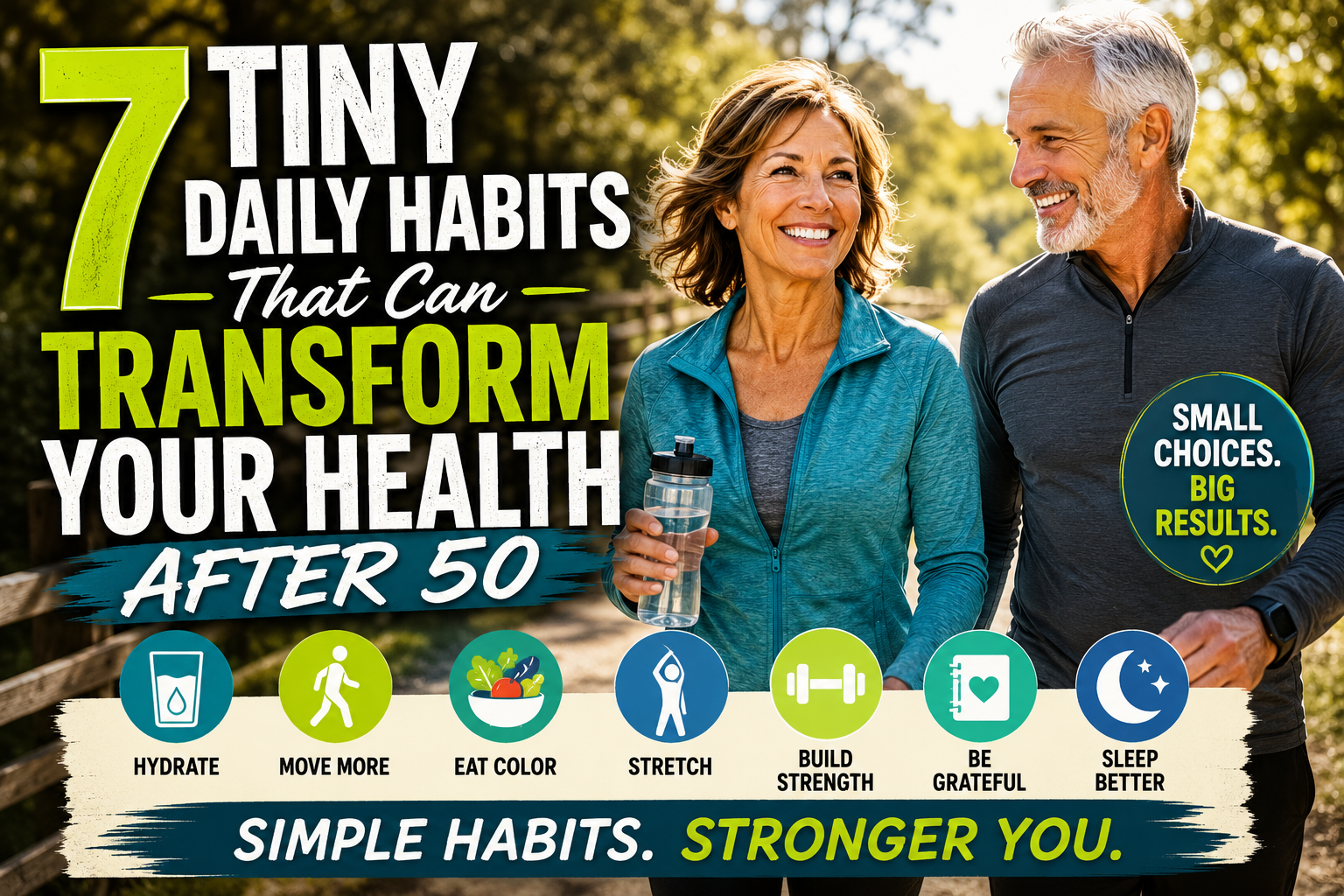
7 tiny daily habits that can transform your health after 50 may sound too simple to make a real difference, but do not underestimate the power of small, consistent actions.
Many people believe getting healthier after 50 requires strict diets, intense workouts, or completely changing their lifestyle overnight. The truth is, lasting success usually comes from doing the little things consistently rather than making drastic changes you cannot maintain.
Whether your goal is to have more energy, stay active, improve your mobility, or simply feel your best, the habits you practice every day matter more than the occasional burst of motivation. Small choices, repeated over time, create powerful results.
In this article, you will discover seven simple daily habits that are easy to start, practical to maintain, and capable of transforming your health one small step at a time. The best part is that you can begin with just one today and build momentum that lasts for years.
These tiny daily habits after 50 are simple enough to fit into almost any routine, even on busy days.
Have you ever noticed how the smallest decisions often have the biggest impact over time?
After 50, staying healthy does not require spending hours in the gym or following a complicated diet. In many cases, the tiny habits you repeat every day have the greatest influence on how energetic, strong, and independent you feel in the years ahead.
The good news is that you do not have to change your entire lifestyle overnight. By making a few small adjustments to your daily routine, you can build momentum that leads to meaningful improvements in your health.
Here are seven tiny daily habits that can make a surprisingly big difference after 50.
1. Drink a Glass of Water Before Your Morning Coffee
Many adults wake up slightly dehydrated after going several hours without drinking anything.
Before reaching for your morning coffee, drink a full glass of water. This simple habit can help you begin the day feeling refreshed and may support digestion, concentration, and normal energy levels.
You do not have to give up coffee. Simply drink some water first.
Why Tiny Daily Habits After 50 Work So Well
To make the habit easier, place a glass beside the coffee maker before going to bed. When the healthy choice is visible and convenient, you are more likely to follow through.
2. Walk for Five Minutes After a Meal
You do not need an hour-long workout to benefit from movement.
A short walk after breakfast, lunch, or dinner can help you spend less time sitting and add more activity to your day. It may also support digestion and healthy blood sugar management.
Five minutes may not sound like much, but consistency changes the math.
A five-minute walk after each of three daily meals adds up to 15 minutes per day. Over an entire year, that becomes more than 90 hours of additional walking.
Start with one meal each day. Once that feels natural, you can gradually add another short walk.
3. Add One More Serving of Color to Your Plate
Many diets focus entirely on what you should remove. That can make healthy eating feel restrictive and difficult to maintain.
Instead, focus on adding one colorful fruit or vegetable to your lunch or dinner.
Examples include:
- Berries with breakfast
- Spinach in an omelet
- Tomatoes on a sandwich
- Carrots with lunch
- Broccoli with dinner
- An apple for an afternoon snack
Colorful foods provide fiber, vitamins, minerals, and other nutrients that support healthy aging.
You do not need to create a perfect meal. Simply look at your plate and ask, “What healthy color can I add?”
4. Stand Up and Stretch Every Hour
Many of us spend hours sitting at a desk, watching television, using a computer, or driving.
Long periods of sitting can leave the body feeling stiff and sluggish. A simple hourly movement break can help you loosen tight muscles and stay more comfortable throughout the day.
Set a reminder on your phone or use a natural cue, such as a television commercial, to remind yourself to stand up.
During your break, you might:
- Roll your shoulders
- Reach your arms overhead
- March gently in place
- Walk to another room
- Take several slow, deep breaths
The goal is not to perform a complete workout. The goal is simply to interrupt long periods of sitting.
5. Do One Minute of Strength Training
Maintaining strength becomes increasingly important as we age.
Strong muscles support balance, mobility, posture, and everyday independence. They help with ordinary activities such as getting out of a chair, carrying groceries, climbing stairs, and working around the house.
You do not have to begin with a long or intense workout. Start with one minute of simple strength-building activity.
You could try:
- 10 chair stands
- 10 wall push-ups
- 10 countertop push-ups
- A short resistance-band exercise
- Several controlled bodyweight squats
Always choose movements that are appropriate for your current health, balance, and fitness level.
One minute may seem insignificant, but it helps establish the habit of strength training. Once the habit is in place, it becomes much easier to increase the time gradually.
6. Write Down One Thing You Are Grateful For
Healthy aging is not only about physical strength. Your emotional well-being matters too.
Take a moment each day to write down one thing you appreciate.
It does not have to be profound. It could be:
- A phone call from a friend
- A beautiful sunrise
- A good cup of coffee
- Time spent with family
- A task you completed
- A peaceful moment during the day
This tiny practice can help shift your attention toward the positive parts of your life, even when the day is not perfect.
Keep a small notebook near your bed, favorite chair, or coffee maker. Linking gratitude to an existing routine makes it easier to remember.
7. Go to Bed Just 15 Minutes Earlier
Quality sleep supports nearly every area of health, including energy, mood, concentration, appetite, and physical recovery.
Unfortunately, many people try to improve their sleep by making a dramatic change they cannot maintain.
Instead of forcing yourself to go to bed an hour earlier, move bedtime forward by just 15 minutes.
That small adjustment can add up to more than 90 additional hours of rest over the course of a year.
You can also create a simple evening routine by dimming the lights, putting away your phone, and preparing for the following morning.
Small nighttime cues can help signal that the day is winding down.
Why Tiny Daily Habits Work
Many people fail to maintain healthy routines because they try to change everything at once.
They decide to exercise every day, eliminate every unhealthy food, wake up before sunrise, drink more water, and completely reorganize their schedule.
For a short time, motivation carries them forward. Then life becomes busy, energy fades, or one imperfect day causes the entire plan to collapse.
Tiny daily habits work because they are realistic.
They do not require unlimited motivation. They fit into your existing life and are easier to repeat on busy, stressful, or low-energy days.
Each small action also builds confidence. When you keep a promise to yourself, even a tiny one, you begin to see yourself differently.
You are no longer someone who is trying to become healthier. You are someone who takes care of your health every day.
How to Make a New Habit Easier to Maintain
Choosing a healthy habit is only the first step. You also need a simple system that helps you remember and repeat it.
Attach It to Something You Already Do
Connect the new habit to an established part of your routine.
For example:
- After I start the coffee, I will drink a glass of water.
- After dinner, I will walk for five minutes.
- After brushing my teeth, I will write down one thing I am grateful for.
- After turning off the television, I will stretch for one minute.
The existing habit becomes a reminder for the new one.
Make the Healthy Choice Visible
Your surroundings strongly influence your behavior.
Place your walking shoes by the door. Keep fruit where you can see it. Leave your resistance band near your favorite chair. Put a glass beside the coffee maker.
When the healthy action is easy to notice and easy to begin, you remove many of the excuses that normally get in the way.
Create a Smaller Version for Difficult Days
Some days will be busy or exhausting. Instead of skipping the habit completely, create a minimum version.
For example:
- If you cannot walk for five minutes, walk for one minute.
- If you cannot complete 10 chair stands, do three.
- If you cannot prepare a full healthy meal, add one piece of fruit.
- If you cannot write in a journal, think of one thing you appreciate.
The smaller version protects the routine and helps prevent one difficult day from becoming a week of inactivity.
Track Consistency, Not Perfection
You do not need a flawless streak to make progress.
Use a calendar, notebook, or simple checklist to mark each day you complete your habit. The goal is to notice your consistency and continue returning to the routine.
Missing one day does not erase your progress. The important thing is to begin again at the next opportunity.
Frequently Asked Questions About Healthy Habits After 50
What Is the Easiest Healthy Habit to Start After 50?
The easiest healthy habit is one that requires very little time, preparation, or effort. Drinking a glass of water in the morning, stretching for one minute, or taking a five-minute walk are excellent starting points.
Choose something that feels almost too easy. Early success creates confidence and makes it easier to build additional habits later.
Can Tiny Habits Really Improve My Health?
Yes. A tiny action may not create a dramatic result overnight, but small actions repeated consistently can produce meaningful changes over months and years.
Walking more often, eating an additional serving of vegetables, sleeping slightly longer, and doing brief strength exercises can all contribute to a healthier lifestyle.
How Long Does It Take to Build a New Habit?
There is no exact timetable that applies to everyone. Some simple habits may begin feeling natural within a few weeks, while more complicated behaviors can take several months.
Instead of focusing on a specific number of days, concentrate on making the habit easy enough to repeat consistently.
What Healthy Habit Should I Focus on First?
Start with the habit that feels easiest to fit into your current routine.
If you already drink coffee every morning, start with a glass of water before coffee. If you eat dinner at approximately the same time each day, begin with a short walk afterward.
The best first habit is not necessarily the most impressive one. It is the one you are most likely to repeat.
Is It Too Late to Build Healthy Habits After 50?
No. It is never too late to make choices that support your well-being.
Adults can improve strength, mobility, daily activity, sleep routines, eating patterns, and overall fitness at many different ages. Progress may look different for each person, but consistent action still matters.
Should I Change Several Habits at Once?
Most people find it easier to begin with one or two habits rather than attempting a complete lifestyle transformation.
Once the first habit feels automatic, you can add another. This gradual approach reduces overwhelm and makes the new routine more sustainable.
What Is the Biggest Mistake People Make When Trying to Get Healthier?
One of the biggest mistakes is relying entirely on motivation.
Motivation naturally rises and falls. A simple system is more dependable. Attach the habit to an existing routine, make the action convenient, and create a smaller version for difficult days.
Which Healthy Habit Produces the Fastest Results?
The results will depend on your current lifestyle and health needs. However, many people quickly notice benefits from better hydration, regular movement, improved sleep, and spending less time sitting.
Rather than chasing the fastest result, choose a habit you can realistically continue. A modest habit practiced for years is more valuable than an extreme routine abandoned after one week.
What Should I Do If I Miss a Day?
Begin again the next day without criticizing yourself.
Missing one day is normal. It does not mean the habit has failed. The danger comes from deciding that one missed day is a reason to quit completely.
Return to the smallest version of the habit and rebuild your momentum.
Do I Need Special Equipment to Become Healthier After 50?
No. Many helpful habits require little or no equipment.
Walking, chair stands, wall push-ups, stretching, drinking water, going to bed earlier, and adding healthier foods to your plate can all be done without an expensive gym membership or complicated program.
Choose One Tiny Habit Today
Improving your health after 50 does not require a dramatic overnight transformation.
Start with one tiny habit. Make it easy. Connect it to something you already do. Practice it until it begins to feel natural.
Then add another.
Over time, those small actions can change how you feel, how you move, and how confidently you approach the years ahead.
The little things you almost ignore may become the very things that transform your health.
Your next step is simple: choose one habit from this list and begin today.
The best tiny daily habits after 50 are the ones you can repeat consistently without feeling overwhelmed.
For more practical ideas about building strength, energy, and healthier routines after 50, explore the other healthy-aging articles here on TakesMassiveAction.com.