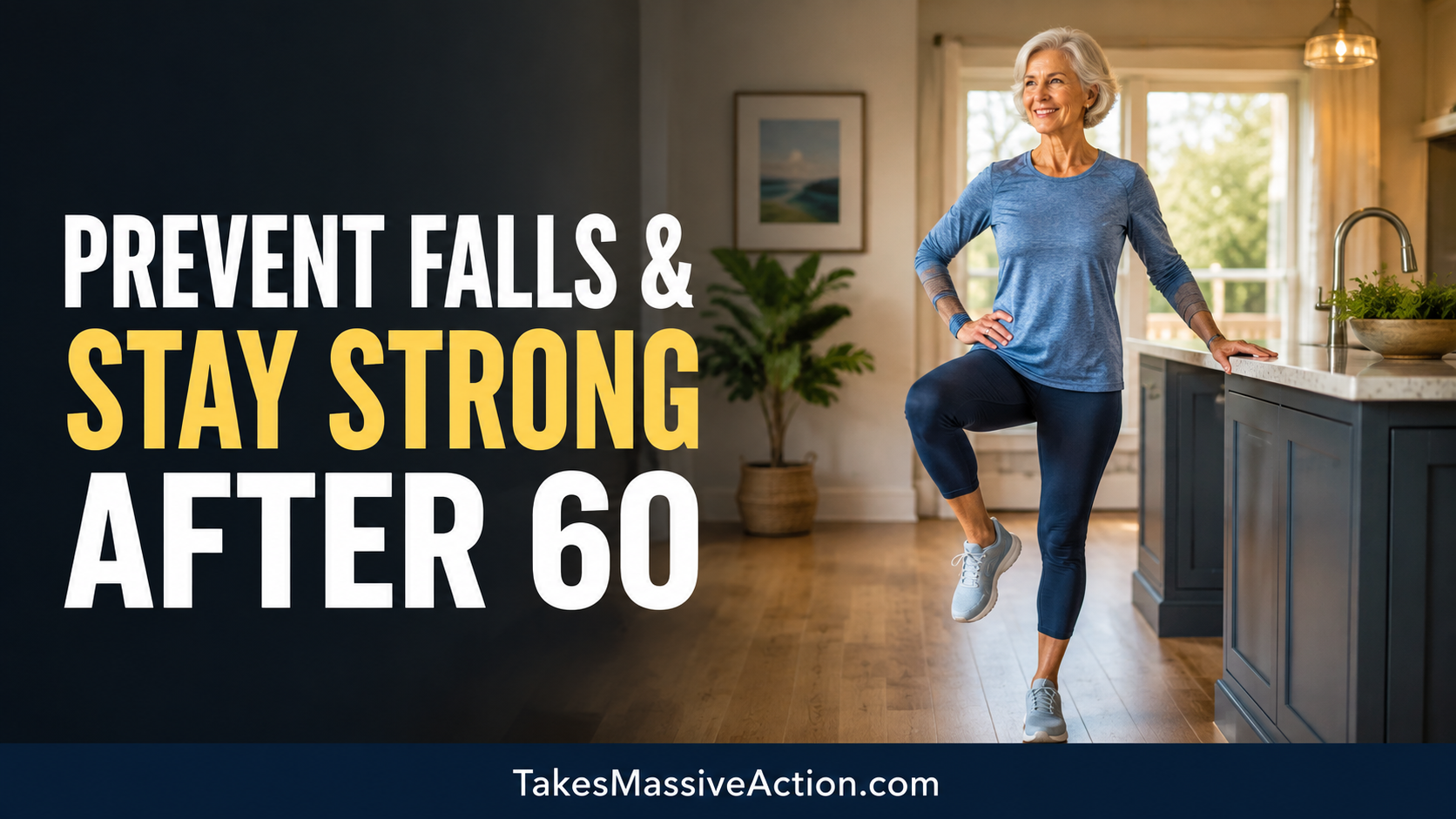
Falls and muscle weakness are not inevitable parts of getting older. Adults over 60 can lower their risk by strengthening the legs and hips, practicing balance, reviewing medications, correcting vision or footwear problems, improving home safety, and discussing new weakness or unsteadiness with a healthcare professional.
These steps matter because falls are the leading cause of injury among Americans 65 and older. More than 14 million—approximately one in four—report falling each year. However, many fall risks can be identified and improved before a serious injury occurs, according to the Centers for Disease Control and Prevention.
Why Do Weakness and Falls Become More Common With Age?
Falls rarely have a single cause. They usually result from several factors working together.
Muscle mass and power can gradually decline with age, particularly when someone becomes less active. Illness, hospitalization, pain, poor nutrition and extended bed rest can accelerate that loss. Weak legs may make it harder to rise from a chair, climb stairs or recover after stumbling.
Other common contributors include:
- Problems with balance or walking
- Dizziness when standing
- Changes in vision or hearing
- Foot pain or poorly fitting shoes
- Medication side effects
- Low blood pressure
- Home hazards such as loose rugs and poor lighting
- Fear of falling, which can lead to less activity and greater weakness
This creates a damaging cycle: a person feels unsteady, moves less to stay safe, becomes weaker and eventually faces an even greater risk of falling. Safe, appropriately scaled activity can help interrupt that cycle.
Sudden or rapidly worsening weakness is different from gradual deconditioning. Weakness affecting one side of the body, facial drooping, new confusion, difficulty speaking, severe dizziness, chest pain or fainting requires urgent medical attention.
What Exercises Help Prevent Falls?
The most useful routine combines strength, balance and aerobic activity. Walking is valuable, but walking alone may not provide enough resistance to rebuild weakened muscles or enough balance challenge to improve stability.
Federal physical-activity guidance recommends that older adults work toward at least 150 minutes of moderate-intensity aerobic activity each week and perform muscle-strengthening activities on at least two days. Older adults should also include balance activities. People who cannot meet the full target should remain as active as their health and abilities allow. Even short periods of movement count, and beginners can build up gradually. See the federal Move Your Way guidance for older adults.
Strengthen the muscles used in everyday life
Priority areas include the thighs, hips, buttocks, calves, back and abdomen. Useful exercises may include:
- Repeatedly standing from a firm chair
- Wall push-ups
- Calf raises while holding a stable counter
- Side leg raises
- Step-ups on a low, secure step
- Resistance-band exercises
- Light weight training
The appropriate resistance should feel challenging while still allowing controlled movement and normal breathing. Technique is more important than lifting heavy weight.
Someone who has recently fallen, needs assistance to stand, has severe osteoporosis, experiences chest pain or has significant heart, joint or neurological conditions should ask a clinician or physical therapist how to begin safely.
Practice balance as a separate skill
Balance improves when it is practiced consistently. Depending on ability, training might include standing with the feet closer together, shifting weight from side to side, walking heel to toe or briefly standing on one foot while holding a sturdy support.
Tai chi and certain forms of yoga can also improve balance and strength. The National Institute on Aging suggests aiming for balance exercise about three times per week.
Balance work should be done beside a countertop, rail or other stable support—not a movable chair. A family member, trained instructor or physical therapist may be helpful when unsteadiness is already present.
Can Better Nutrition Reduce Weakness?
Muscles need both activity and adequate nutrition. Eating too little—whether because of reduced appetite, dental problems, illness, medication effects or difficulty shopping and cooking—can contribute to fatigue, weight loss and loss of strength.
Each meal should ideally contain a source of protein, such as eggs, yogurt, milk, fish, poultry, beans, lentils, tofu or lean meat. Fruits, vegetables, whole grains and healthy fats provide energy and nutrients that support overall health.
Unplanned weight loss deserves attention. Clothing becoming looser, meals being skipped or increasing difficulty carrying groceries and rising from a chair may signal declining strength or inadequate nutrition.
Vitamin D and calcium are important for bone health, but supplements are not automatically appropriate for everyone. Needs vary with diet, medical conditions, medications and laboratory findings. Large doses can cause harm, so supplements should be discussed with a qualified healthcare professional rather than treated as a stand-alone fall-prevention solution.
Which Medications Can Increase Fall Risk?
Some prescription and over-the-counter medicines can cause sleepiness, blurred vision, slowed reactions, low blood pressure or dizziness. The CDC identifies sedatives, tranquilizers and some antidepressants among the medicines that may affect balance, although many other drugs and drug combinations can also contribute.
Risk may increase after a medication is started, its dose is changed or several medicines are combined. Alcohol can intensify certain effects.
Ask a physician or pharmacist to review every medication, including sleep aids, allergy products, pain relievers and supplements. Questions worth asking include:
- Could any of these medicines make me dizzy or unsteady?
- Do any have overlapping side effects?
- Could the timing or dose be adjusted safely?
- Is every medication still necessary?
Never stop a prescription medication abruptly without professional guidance.
How Can the Home Be Made Safer?
Home safety changes should make normal movement easier, not restrict independence.
Start with the routes used most often: the path from the bed to the bathroom, stairways, the kitchen and entrances. Remove loose rugs, electrical cords and clutter. Repair uneven flooring, add secure handrails to both sides of stairs when possible, and improve lighting near steps and doorways.
Bathrooms deserve special attention. Nonslip surfaces, securely installed grab bars and an appropriate shower seat can reduce risk. Towel racks are not designed to support body weight.
Frequently used items should be stored within easy reach. Climbing onto chairs or unstable stools is dangerous at any age, particularly when balance or leg strength has changed. The National Institute on Aging provides a practical room-by-room fall-prevention guide.
Do Vision, Hearing and Footwear Matter?
Clear vision helps a person detect changes in floor level, obstacles and low-contrast steps. Regular eye examinations are important, especially when vision seems blurred or depth perception has changed.
Hearing problems can reduce awareness of surrounding activity and may coexist with balance disorders. Report new hearing loss, ringing in the ears or spinning sensations.
Shoes should fit securely and have stable, nonslip soles. Avoid walking in socks on smooth floors, loose slippers and shoes with worn tread. Foot pain, numbness or deformity can change the way someone walks and should be evaluated.
When Should a Fall Be Discussed With a Doctor?
Tell a healthcare professional about any fall, even when it did not cause an obvious injury. Also report near-falls, increasing reliance on furniture, difficulty rising from a chair, dizziness upon standing or a new fear of walking.
A fall-risk assessment may include checking walking and balance, blood pressure while sitting and standing, vision, feet, medications and home hazards. The CDC’s STEADI approach organizes this process around three actions: screen, assess and intervene.
After a fall, seek emergency help for a possible head, neck, back or hip injury; loss of consciousness; severe pain; uncontrolled bleeding; new confusion; vomiting; or inability to stand or bear weight. Head impacts are particularly concerning for people taking blood thinners.
A Practical Starting Plan
Fall prevention works best when it becomes part of ordinary life. Begin with four manageable actions:
- Schedule two weekly strength sessions and three short balance sessions.
- Ask a pharmacist or clinician for a complete medication review.
- Clear and illuminate the main walking paths at home.
- Report falls, dizziness, new weakness and unsteadiness instead of waiting for them to worsen.
The goal is not to eliminate movement in the name of safety. It is to build enough strength, confidence and environmental support to keep moving independently.
Frequently Asked Questions
What is the best exercise for preventing falls after 60?
No single exercise is best. A program combining leg and hip strengthening, balance practice and aerobic activity is more complete than walking alone. The safest starting level depends on current mobility and medical conditions.
How often should older adults practice balance exercises?
The National Institute on Aging suggests about three balance sessions per week. Sessions can be brief, but the exercises should be performed near stable support when there is any risk of losing balance.
Is falling a normal part of aging?
Falls become more common with age, but they should not be dismissed as normal or unavoidable. Weakness, medication effects, vision problems, unsafe surroundings and many other risk factors can often be addressed.
Why am I getting weaker even though I walk every day?
Walking supports endurance but may not sufficiently challenge the muscles needed for rising, climbing and recovering from a stumble. Progressive resistance exercises may help, but persistent or worsening weakness should be medically evaluated.
Should I use a cane or walker?
A correctly fitted mobility aid can improve stability and independence. An improperly sized or incorrectly used device can create new hazards, so fitting and instruction from a physical therapist or other qualified professional are advisable.
What should I do if I am afraid of falling?
Share that concern with a healthcare professional. A fall-risk assessment, supervised exercise and gradual balance training can help rebuild both ability and confidence. Avoiding all activity usually increases weakness and may make future falls more likely.