Have you ever finished a walk and wondered why your knees, hips, or feet hurt more than they used to?
You’re not alone.
For many people over 50, walking becomes the exercise of choice. It’s easy on the joints, doesn’t require a gym membership, and almost every doctor recommends it. Walking can improve heart health, lift your mood, help control weight, and keep you active for years to come.
But here’s what many people don’t realize.
Your body at 55 isn’t the same body you had at 35. Your muscles recover differently. Your joints absorb impact differently. Even your feet change shape over time. That doesn’t mean you should stop walking—it simply means the way you walk may need to change.
Many people assume their aches and pains are simply part of getting older, when in reality one or two small walking habits may be putting unnecessary stress on their bodies.
The good news? Most of those mistakes are easy to fix.
If you’re walking regularly and want to stay active, independent, and pain-free for years to come, these simple adjustments can make every walk safer, more comfortable, and far more enjoyable.
Editor’s Note: This article is for general educational purposes and is not a substitute for personalized medical advice. If you have ongoing pain, balance problems, chest discomfort, dizziness, or a medical condition that affects walking, speak with your healthcare provider before changing your exercise routine.
Your Walking Shoes May Not Be Helping You Anymore
Most people keep buying the same kind of shoes because they have always worked.
That makes sense. But your feet do not stay exactly the same forever.
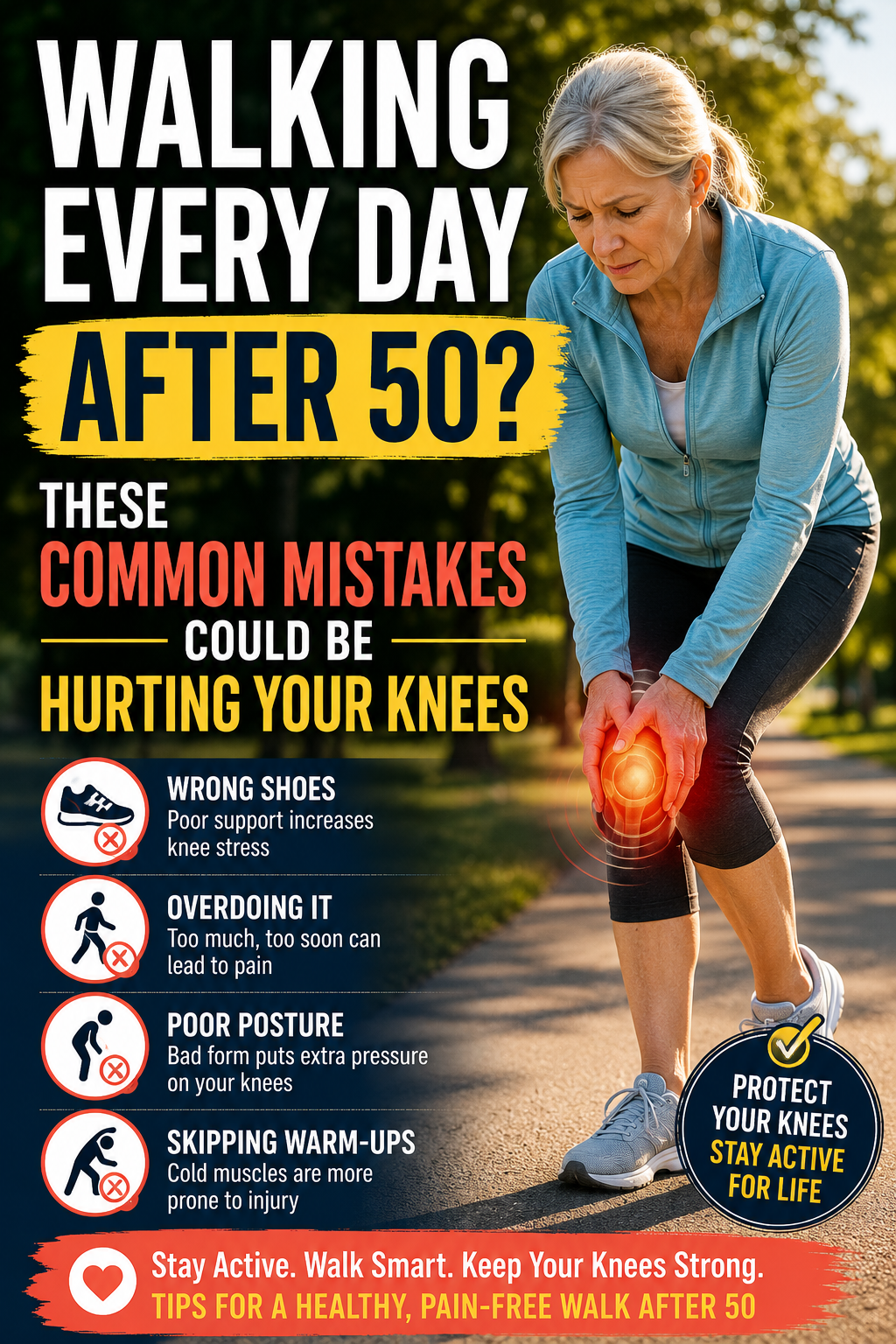
After 50, the natural padding under your heels can become thinner. Your arches may shift. Your toes may need more space. A shoe that once felt perfect can slowly become part of the reason your knees or hips ache after a walk.
Walking shoes should feel supportive, flexible, and roomy in the toe box. They should bend near the ball of your foot, not collapse in the middle. They should also be replaced before the cushioning is completely worn out.
A simple rule: if your walking shoes have several months of regular use and your knees suddenly feel worse, check the shoes first.
Something to remember: Sometimes the easiest way to reduce walking discomfort is not walking less. It is walking with better support.
Your Heart Rate Still Matters Even If Walking Feels Easy
Good shoes are a great place to start. But even the best shoes cannot protect you if you are walking harder than your body is ready for.
Walking feels gentle, so it is easy to assume you are not overdoing it.
But your heart may be working harder than you realize, especially in heat, humidity, or hilly areas.
A good walking pace should let you speak in full sentences. If you are gasping, pushing through dizziness, or feeling pressure in your chest, slow down and stop if needed.
You do not need to turn every walk into a workout challenge. After 50, consistency usually beats intensity.
The bottom line: The best walking pace is one you can repeat safely and comfortably week after week.
Skipping a Warm-Up Is One of the Biggest Mistakes
Finding the right pace is important. Preparing your body before you start is just as important.
Years ago, you may have been able to walk out the door and immediately hit your normal pace.
After 50, your body appreciates a little more patience.
Your muscles, tendons, ankles, knees, and hips need time to prepare. A short warm-up can make your walk feel smoother and reduce the chance of soreness later.
Try this before your next walk:
- Do 10 ankle circles in each direction.
- March in place for one minute.
- Do 10 gentle knee lifts per side.
- Start your walk at half speed for the first 5 to 10 minutes.
That small preparation can make a big difference.
Something to remember: A warm-up is not wasted time. It is how you tell your body, “We’re moving now.”
The Surface You Walk On Can Affect Your Knees
Once your body is warmed up, the next thing to consider is where your feet are landing.
If your knees ache after every walk, it may not be your age.
It may be the sidewalk.
Concrete is hard and unforgiving. Softer surfaces like dirt paths, rubber tracks, grass, or smooth park trails can feel easier on your joints.
That does not mean you can never walk on sidewalks. But if you are dealing with knee pain, hip pain, or heel pain, changing your walking surface is one of the simplest adjustments to try.
The bottom line: Your route matters. A softer walking surface can make the same distance feel much kinder to your body.
Your Hydration Needs Change After 50
Surface matters, but so does what is happening inside your body while you walk.
Many adults notice they do not feel thirsty as often as they used to.
That can be risky during walks.
Dehydration can contribute to dizziness, fatigue, headaches, and poor balance. You may not feel thirsty until you are already behind.
Drink water before your walk, especially in warm weather. For longer walks, carry a small bottle and sip regularly.
Coffee does not replace water before exercise. If you drink coffee in the morning, give your body some water too.
Something to remember: Feeling thirsty is not the only sign your body needs water. A little preparation before your walk can help you feel steadier and more energized.
Balance Training Should Be Part of Walking After 50
Hydration helps keep you steady, but balance deserves its own attention too.
Walking strengthens your legs, but it does not automatically train your balance enough.
That matters because balance often declines quietly. You may only notice it when you trip, step off a curb, or feel unsteady turning your head while walking.
Add simple balance work into your routine:
- Stand on one leg for 10 seconds per side.
- Walk heel-to-toe for 10 to 20 steps.
- Practice turning your head gently while walking slowly.
- Walk on gentle inclines when safe.
These small drills help your body stay responsive and confident.
The bottom line: Balance is not something you only need after a fall. It is something you build before one happens.
Recovery Is What Keeps Walking Safe Long-Term
Once you are walking with better shoes, better pacing, better hydration, and better balance, there is one final piece that keeps the habit sustainable: recovery.
Walking every day sounds healthy, and for some people it can be. But many adults over 50 do better with one or two lighter recovery days each week.
Recovery is not laziness. It is maintenance.
Your joints, tendons, and muscles need time to adapt, especially if you are increasing distance, speed, or hills.
After your walk:
- Slow down for the last 5 minutes.
- Stretch your calves gently.
- Drink water.
- Eat some protein within an hour.
- Pay attention to pain that lasts more than two days.
A little recovery today can prevent a bigger setback later.
Something to remember: The goal is not to prove how much you can push through. The goal is to keep walking comfortably for years.
Frequently Asked Questions
Is walking every day after 50 bad for you?
No. Walking is generally very good for you. The issue is not walking itself. The problem is walking with poor shoes, no warm-up, too much intensity, hard surfaces, poor hydration, or no recovery.
How long should I walk each day after 50?
Many people do well with 20 to 40 minutes most days. If you are just starting, begin with 10 to 15 minutes and increase slowly.
Can walking hurt my knees?
Walking can aggravate knee pain if your shoes are worn out, your pace is too aggressive, your route is too hard on your joints, or you are not allowing enough recovery.
What is the best walking surface after 50?
Smooth dirt trails, rubber tracks, grass, and well-maintained park paths are often easier on the joints than concrete sidewalks.
Should I stretch before walking?
Gentle movement is better before walking. Save longer static stretches for after your walk when your muscles are warm.
How do I know if I am walking too fast?
You should be able to speak in full sentences. If you are gasping, dizzy, or uncomfortable, slow down.
Products / Tools / Resources
Supportive Walking Shoes
Choose shoes made specifically for walking with good cushioning, a flexible forefoot, and enough room in the toe box. A properly fitted pair can make walking feel easier on your feet, knees, and hips.
Heart Rate Monitor
A simple heart rate monitor or fitness watch can help you avoid pushing too hard. This is especially useful if you walk in heat, on hills, or after a long break from exercise.
Water Bottle
A lightweight handheld bottle makes it easier to stay hydrated on longer walks. Look for one that is easy to grip and comfortable to carry.
Resistance Bands
Resistance bands help strengthen the muscles that support your knees, hips, and ankles. They are affordable, portable, and easy to use at home.
Balance Pad
A balance pad can help improve stability and confidence at home. Use it near a wall or sturdy chair for safety.
Walking Log
Track your distance, shoes, pain levels, and energy. Patterns become easier to spot when you write them down, especially if discomfort appears after certain routes, shoes, or walking speeds.