
Most people get healthy aging completely wrong.
They think it means looking younger. They focus on wrinkles, gray hair, and finding the next miracle product that promises to turn back the clock. While there is nothing wrong with wanting to look your best, healthy aging is about much more than appearance.
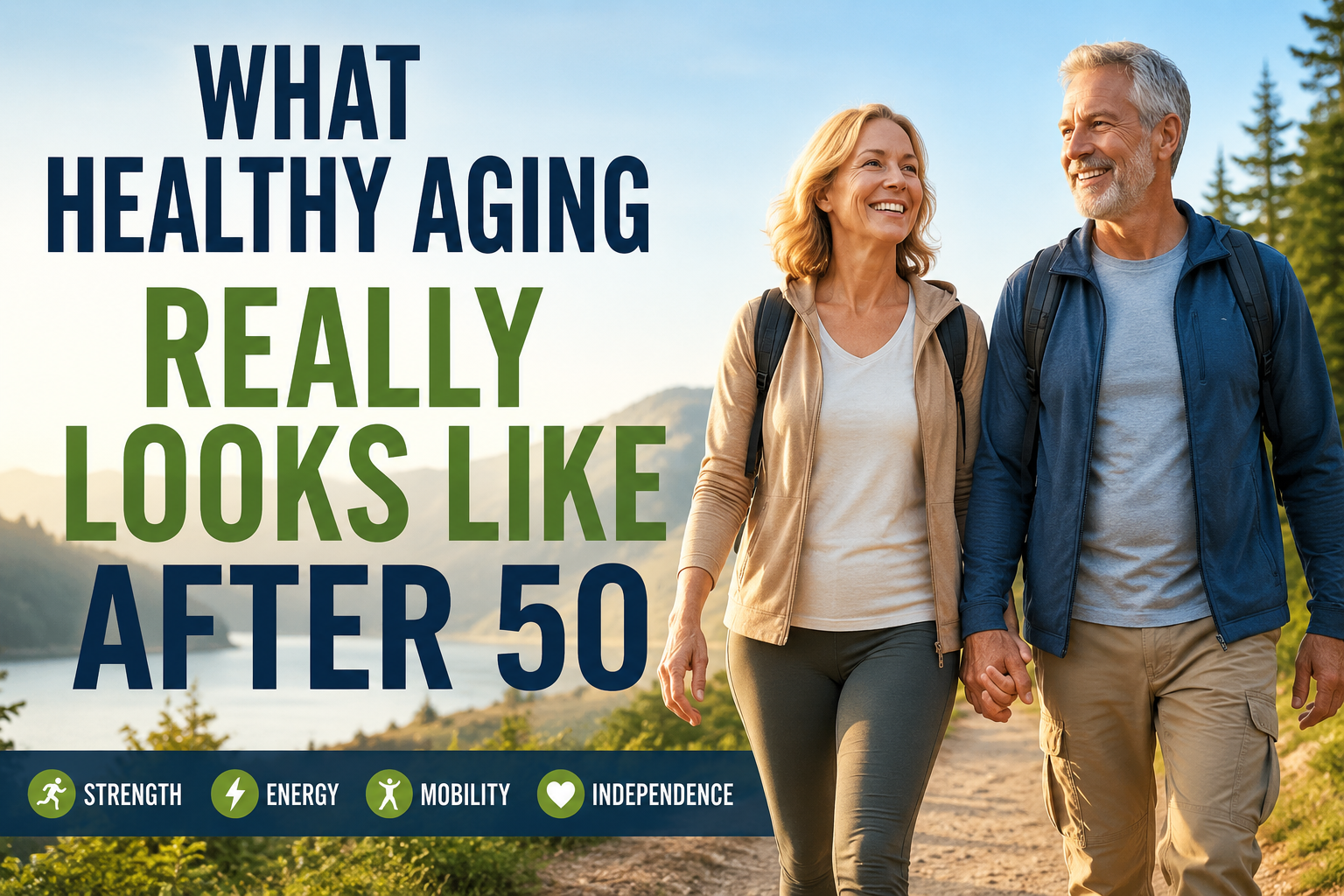
What healthy aging really looks like is having the strength, energy, mobility, and independence to enjoy your life. It means being able to do the things you love without constantly feeling limited by your age.
The good news is that healthy aging is not reserved for a lucky few. It is influenced by daily habits that almost anyone can improve. You cannot stop the passage of time, but you can make choices that help you feel better, move better, and maintain a higher quality of life as the years go by.
Healthy Aging Starts With Movement
One of the biggest predictors of healthy aging is staying physically active.
Your body was designed to move. Unfortunately, modern life encourages long hours of sitting. Over time, inactivity contributes to muscle loss, reduced mobility, poor balance, and declining energy levels.
You do not need to become a marathon runner or spend hours in the gym. Consistent movement is what matters most.
Walking remains one of the best activities for adults over 50. It supports heart health, circulation, endurance, and mental well-being. Even a daily 20 to 30 minute walk can make a noticeable difference.
However, healthy aging involves more than walking alone. Strength training becomes increasingly important as we age because it helps preserve muscle mass, supports bone health, and improves overall function.
Simple exercises using resistance bands, light weights, or body weight can help maintain strength and mobility for years to come.
Energy Matters More Than Appearance
Many people focus on how they look while ignoring how they feel.
You can appear healthy on the outside while struggling with low energy, poor sleep, and constant fatigue. Healthy aging means having the energy to enjoy your daily life.
Energy is influenced by many factors including nutrition, hydration, sleep quality, stress levels, and physical activity.
When these areas are neglected, the body often responds with fatigue and reduced performance. Many adults assume this decline is simply part of aging, but lifestyle habits often play a larger role than age itself.
People who age well tend to prioritize recovery, manage stress effectively, and make choices that support long-term wellness rather than quick fixes.
Maintaining Muscle After 50 Is Essential
One of the most important aspects of healthy aging is preserving muscle mass.
Beginning around middle age, adults naturally lose muscle if they do not actively work to maintain it. This process can affect strength, balance, metabolism, and overall independence.
Muscle is not just about appearance. It helps you carry groceries, climb stairs, get out of a chair, and remain physically capable throughout life.
Strength training combined with adequate protein intake can help support healthy muscle maintenance. Even modest improvements in strength can make everyday activities feel easier and reduce the risk of injury.
The goal is not to become a bodybuilder. The goal is to remain strong enough to live life on your terms.
Healthy Aging Includes Mental and Emotional Well-Being
Physical health is only part of the picture.
Healthy aging also includes maintaining mental sharpness and emotional resilience.
People who remain socially connected often report greater life satisfaction as they age. Relationships with family, friends, neighbors, and community groups provide support and purpose.
Keeping your mind active also matters. Reading, learning new skills, solving puzzles, and engaging in meaningful conversations can help keep your brain engaged.
Purpose plays an important role as well. People who continue pursuing hobbies, volunteering, traveling, mentoring, or exploring new interests often maintain a more positive outlook on life.
Healthy aging is not about slowing down. It is about continuing to grow and enjoy new experiences.
Sleep Becomes More Important With Age
Many adults over 50 notice changes in their sleep patterns.
Unfortunately, poor sleep can affect nearly every aspect of health including mood, concentration, energy levels, and physical recovery.
Healthy aging requires making sleep a priority.
Creating a consistent sleep schedule, limiting caffeine late in the day, reducing screen exposure before bed, and maintaining a comfortable sleep environment can all support better rest.
Quality sleep helps the body recover from daily stress and prepares you for the next day.
Nutrition Supports Healthy Aging
Food provides more than calories. It provides the building blocks your body needs to function properly.
A healthy aging diet typically includes a variety of fruits, vegetables, lean proteins, healthy fats, and whole grains.
Protein deserves special attention after age 50 because it supports muscle maintenance and recovery. Many adults fail to consume enough protein throughout the day.
Hydration also plays a key role. Even mild dehydration can contribute to fatigue, headaches, and reduced physical performance.
The goal is not perfection. The goal is consistently making choices that support your long-term health and well-being.
Consistency Beats Perfection Every Time
One of the biggest myths about healthy aging is that you need a perfect routine.
You do not need a perfect diet.
Exercise seven days a week is a good habit, especially for those past 50.
You do not need to follow every health trend that appears online.
The people who age well typically focus on consistency rather than perfection.
They make reasonable choices most of the time. Even stay active. Try to prioritize sleep. Manage stress a lot better. They continue learning and growing.
Small habits repeated daily often create greater results than dramatic changes that only last a few weeks.
What Healthy Aging Really Looks Like
Healthy aging looks different for everyone, but the common theme is maintaining the ability to enjoy life.
looks to me like taking walks without pain.
It looks like traveling and exploring new places.
What about playing with grandchildren.
It looks like working in the garden.
Some people would say it looks like staying independent and confident.
It looks like waking up with purpose and having the energy to pursue the things that matter most.
Healthy aging is not about trying to become younger. It is about becoming the healthiest version of yourself at every stage of life.
Final Thoughts
The healthiest people over 50 are not necessarily the ones who look the youngest. They are the ones who continue moving, learning, growing, and enjoying life.
Healthy aging is built on simple habits practiced consistently over time. Movement, strength, nutrition, sleep, social connection, and purpose all work together to support long-term well-being.
You cannot control every aspect of aging, but you can influence how you experience it. The choices you make today can help create a healthier, more active, and more fulfilling tomorrow.
Healthy aging is not about adding years to your life. It is about adding life to your years.