
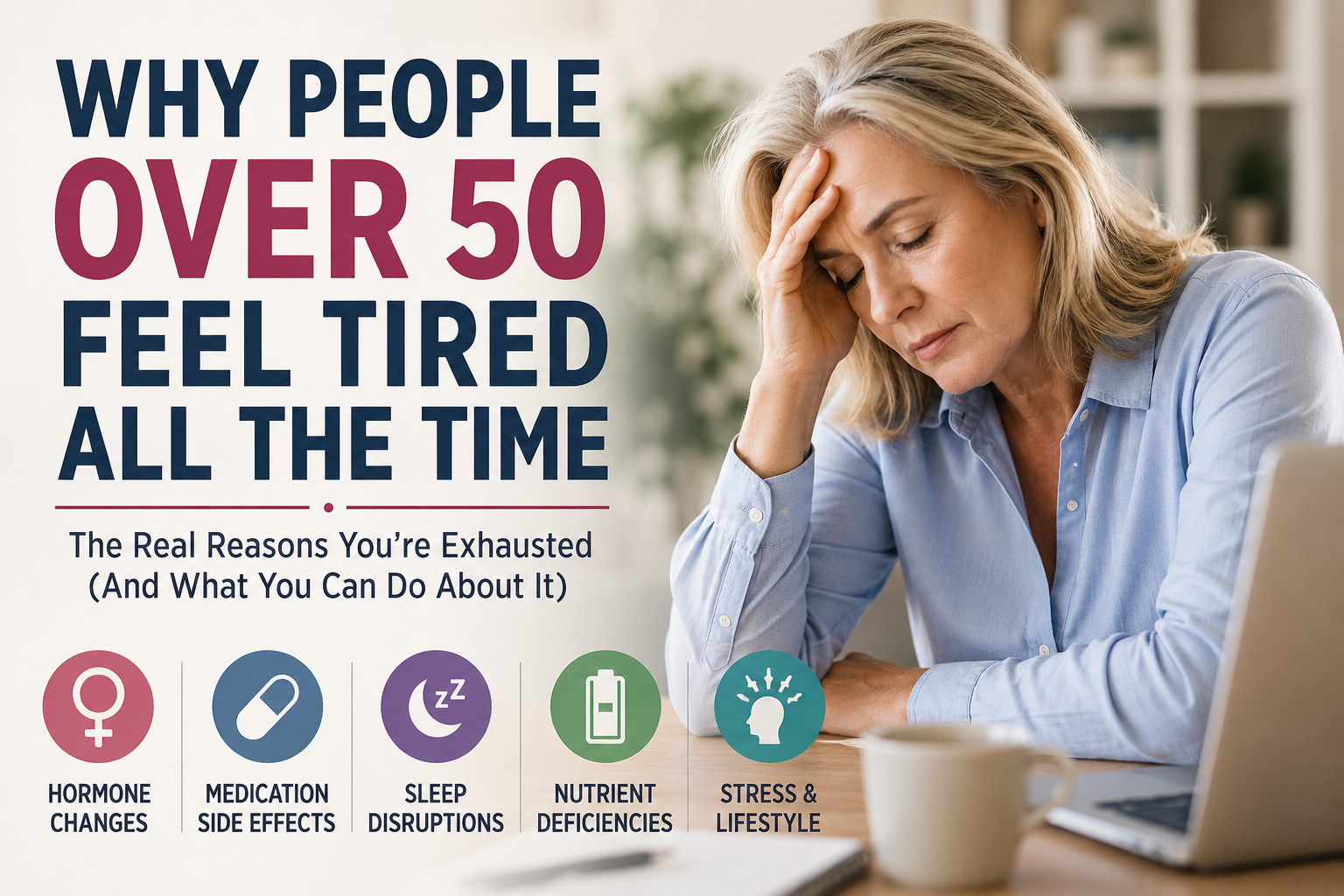
Most people over 50 assume feeling drained every afternoon is just part of getting older. You push through it. Maybe grab another cup of coffee. Maybe sit down for “just a minute” and suddenly realize you almost fell asleep in the chair.
But there’s usually more going on beneath the surface.
You finish lunch and two hours later you can barely keep your eyes open. Your desk feels like a magnet pulling your head down. This afternoon crash happens almost every day now. The fix usually isn’t more caffeine. It’s understanding what changed in your body after 50.
Why Hormones Change After 50
One of the biggest reasons energy changes after 50 is hormones.
For women, menopause and perimenopause can dramatically affect energy levels. Estrogen and progesterone help regulate much more than reproduction. They also influence sleep, stress response, mood, and overall vitality.
During perimenopause, hormone levels begin fluctuating constantly. One night you sleep okay. The next night you wake up sweating at 2 AM and can’t fall back asleep. Those interruptions slowly build into daytime exhaustion.
Lower estrogen levels can also make it harder for the body to regulate cortisol, the stress hormone. Higher cortisol can leave you feeling wired at night and drained during the day.
Men experience hormonal changes too.
Testosterone levels gradually decline with age, and that shift can affect energy, motivation, muscle mass, and even mental focus. Some men notice they simply don’t recover the way they used to. Others feel tired even after a full night of sleep.
Then there’s the thyroid.
A sluggish thyroid is incredibly common after 50Why Your Energy Crashes in the Afternoon After 50 and often goes unnoticed for years. Symptoms can include fatigue, weight gain, brain fog, feeling cold all the time, dry skin, and low motivation.
Many people assume they’re just slowing down with age when the real issue may be thyroid function.
The good news is that thyroid problems are usually easy to test for with simple blood work.
Understanding why people over 50 feel tired all the time starts with realizing these hormonal changes are common. But common does not mean normal or untreatable.
Medications Can Quietly Drain Your Energy
Another overlooked issue is medication fatigue.
Many people over 50 take medications daily and never realize some of them may contribute to exhaustion.
Blood pressure medications, antihistamines, antidepressants, acid reducers, sleep aids, and certain pain medications are all known to cause fatigue in some people.
What makes this more complicated is how the body changes with age.
As we get older, the body typically holds less water and more fat tissue. That changes how medications move through the body. The same dose that felt perfectly fine at 40 may affect you very differently at 60.
Some medications linger longer. Others hit harder.
That’s one reason older adults often experience more side effects from medications than younger people do.
Sometimes the medication itself isn’t even the full problem. Certain medications can also interfere with sleep quality, nutrient absorption, or hormone balance, which creates a chain reaction of low energy.
Acid reducers are one example.
Many people take them daily for years without realizing stomach acid helps absorb important nutrients like vitamin B12. Less absorption can slowly contribute to fatigue over time.
This doesn’t mean people should stop taking prescribed medications on their own.
It simply means it’s worth having a conversation with your doctor if fatigue suddenly appears or gradually worsens over time.
Sometimes a dosage adjustment or medication review makes a major difference.
Why Sleep Changes After 50
One of the most frustrating parts about getting older is realizing you can sleep eight hours and still wake up exhausted.
That happens because sleep changes with age.
After 50, people typically spend less time in deep restorative sleep. The body also tends to wake more often throughout the night, even if you don’t fully remember it happening.
You may think you slept seven or eight hours.
But only part of that sleep may have actually restored your body.
Many people over 50 also notice they start waking up earlier. That’s tied to changes in circadian rhythm, sometimes called a “phase advance,” where the body clock shifts forward.
The result is lighter sleep, more awakenings, and less recovery.
Melatonin production also tends to decrease with age. Since melatonin helps regulate the sleep cycle, lower levels can weaken the body’s natural sleep signals.
Sleep apnea becomes more common too.
Some people stop breathing dozens of times per hour while sleeping and never even realize it. Others wake repeatedly because of nighttime bathroom trips or discomfort.
Poor sleep quality quietly chips away at energy levels day after day.
That’s why feeling tired after 50 is not always about how many hours you sleep. The quality of those hours matters even more.
Nutrient Absorption Changes With Age
This is another area many people never think about.
The body often becomes less efficient at absorbing nutrients as we age.
Vitamin B12 is a perfect example.
B12 plays a major role in energy production, nerve health, and red blood cell formation. But absorption is surprisingly complicated. It depends on the stomach, digestive enzymes, and small intestine all working together properly.
As stomach acid naturally decreases with age, B12 absorption may decrease too.
That means you could technically be eating enough B12 while still becoming deficient.
Low B12 levels can cause:
- fatigue
- weakness
- dizziness
- brain fog
- shortness of breath
- poor concentration
And because symptoms usually develop slowly, many people simply blame aging.
Iron deficiency and anemia can create similar problems.
If the body struggles to absorb iron properly, oxygen delivery throughout the body decreases. That leaves you feeling weak, sluggish, and mentally drained.
Digestive conditions like gastritis, Crohn’s disease, celiac disease, or long-term acid reducer use can all interfere with nutrient absorption too.
This is why blood testing matters.
A simple check of B12, iron, hemoglobin, and thyroid levels can sometimes reveal problems people have been struggling with for years.
Most people skip this step completely.
They assume exhaustion is just life after 50.
Often it isn’t.
The Bigger Picture
One thing becomes very clear after looking at all these factors.
Energy problems after 50 are rarely caused by just one thing.
Sometimes it’s hormones.
Sometimes it’s medications.
Sometimes it’s poor sleep quality.
Sometimes it’s nutrient absorption.
And sometimes it’s a combination of several smaller issues quietly stacking together over time.
That’s why simply “trying harder” or drinking more coffee usually doesn’t solve the problem.
Once I started understanding how energy changes after 50, I realized supporting the body became more important than simply pushing harder through the day.
Small changes can make a surprisingly big difference over time.
Frequently Asked Questions
Is it normal to feel tired all the time after 50?
No. While energy levels can change somewhat with age, constant fatigue should not simply be dismissed as “getting older.” Persistent tiredness often points to issues like poor sleep quality, hormone changes, medication side effects, thyroid problems, or nutrient deficiencies.
What blood tests should I ask for if I’m always tired?
Many doctors will check:
- thyroid levels
- vitamin B12
- iron
- hemoglobin
- complete blood count (CBC)
These tests can help uncover common causes of fatigue.
Can medications really cause fatigue?
Yes. Blood pressure medications, antihistamines, antidepressants, sleep aids, and acid reducers commonly contribute to tiredness in some people, especially after 50.
Why do I wake up tired after sleeping all night?
Because sleep quality matters more than total hours. After 50, many people spend less time in deep restorative sleep and wake more frequently during the night without realizing it.
When should I see a doctor about fatigue?
If you’ve felt unusually tired for several weeks, struggle to complete normal activities, need frequent naps, or wake up exhausted regularly, it’s worth discussing with a healthcare provider.
1 thought on “Why People Over 50 Feel Tired All The Time”