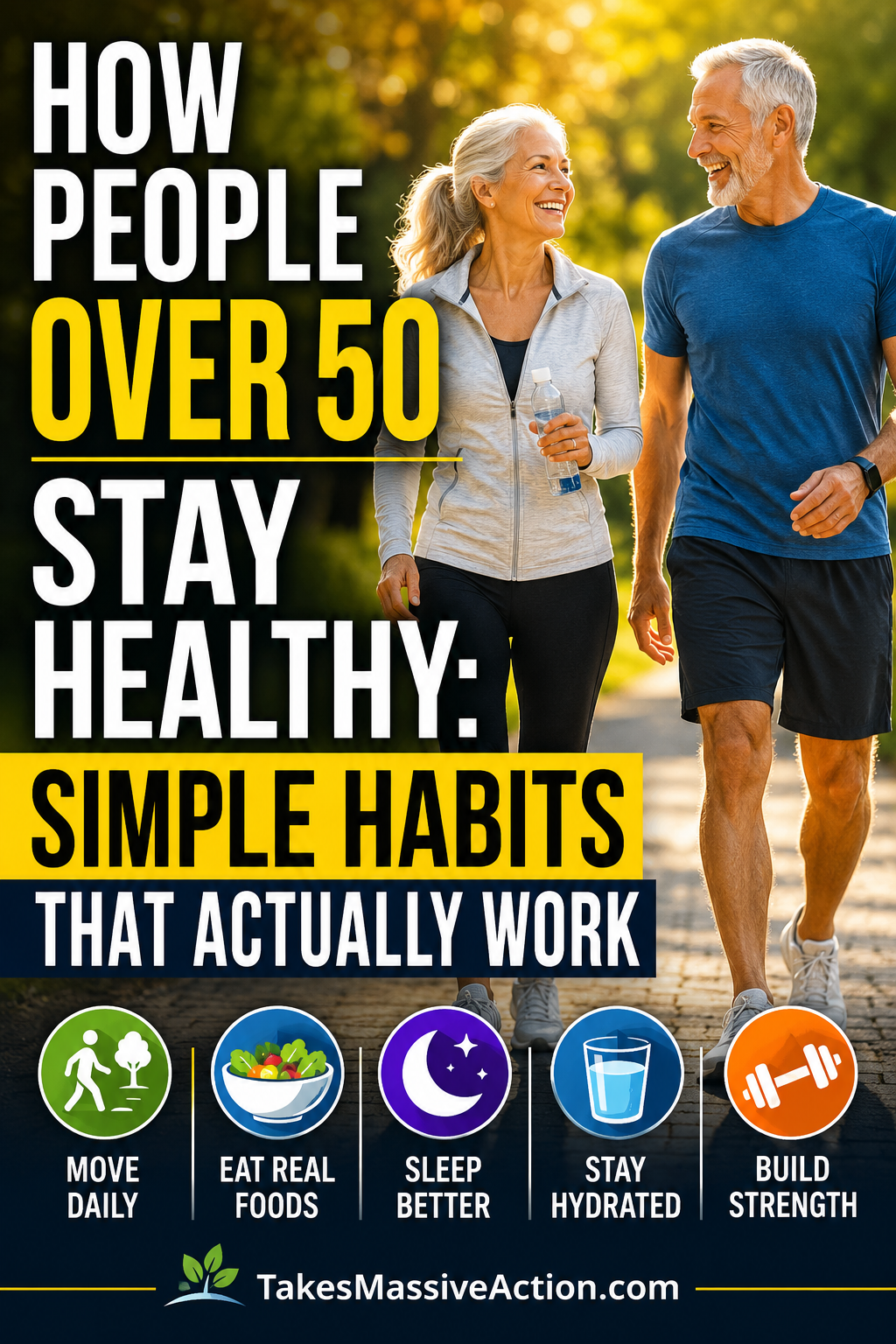
How People Over 50 Stay Healthy: Simple Habits That Actually Work
If you’ve ever wondered why some people seem to stay energetic, active, and independent well into their 60s, 70s, and beyond while others struggle with declining energy and mobility, the answer usually isn’t luck or finding the latest health trend.
More often than not, it’s the result of simple habits repeated consistently over many years.
Many adults over 50 spend too much time looking for dramatic solutions. They jump from one diet to another, buy expensive supplements, or start exercise programs that feel impossible to maintain. After a few weeks, life gets busy, motivation fades, and they’re back where they started.
The truth is much simpler.
Healthy aging isn’t about doing everything perfectly. It’s about making enough good choices, often enough, that they become part of your everyday life.
In this article, you’ll learn why many traditional approaches fail after 50, which habits truly matter, and how to build a healthier lifestyle you can actually maintain for years—not just a few weeks.
Why Staying Healthy Gets More Challenging After 50
Getting older doesn’t mean poor health is inevitable.
However, your body does begin changing in ways that deserve attention.
Recovery from exercise may take longer.
Muscle becomes easier to lose if you don’t use it.
Flexibility gradually decreases.
Sleep quality often changes.
Even balance becomes more important because it helps protect your independence.
Many people make the mistake of responding to these changes the same way they did when they were younger.
They exercise too hard.
They follow restrictive diets.
They expect fast results.
Then they become discouraged when progress slows.
The better approach is learning to work with your body instead of fighting against it.
The Biggest Myth About Healthy Aging
One of the most damaging beliefs is that staying healthy requires extraordinary discipline.
It doesn’t.
The healthiest adults usually aren’t constantly motivated.
They’re simply consistent.
Instead of trying to transform their lives overnight, they’ve built routines that naturally fit into their everyday schedule.
Think about someone who takes a walk every evening after dinner.
That habit may not seem impressive.
But after months and years, it supports heart health, mobility, endurance, mood, and overall activity.
Small habits become powerful because they’re repeated.
The Daily Habits That Matter Most
Rather than chasing every new health trend, focus on habits that support your entire body.
Prioritize Quality Sleep
Sleep is when much of your body’s recovery takes place.
Instead of trying to catch up on weekends, aim for a consistent bedtime and wake-up schedule whenever possible.
Simple evening routines—reducing screen time, limiting late caffeine, and creating a comfortable sleeping environment—often improve sleep more than people expect.
Eat More Whole Foods
Healthy eating doesn’t require perfection.
It requires better consistency.
Build meals around foods that are close to their natural form whenever practical.
That includes vegetables, fruits, lean proteins, beans, whole grains, nuts, seeds, and healthy fats.
Another overlooked point is protein.
Maintaining muscle becomes increasingly important after 50, and spreading protein across your meals can support that goal better than eating most of it at dinner.
Keep Moving Every Day
Exercise isn’t only about burning calories.
Movement helps preserve independence.
Walking remains one of the easiest and most effective forms of activity because it’s accessible to almost everyone.
But don’t stop there.
Strength exercises help preserve muscle.
Stretching supports comfortable movement.
Balance exercises reduce the risk of falls.
Each serves a different purpose.
Stay Hydrated
Many adults don’t realize they’re mildly dehydrated until fatigue, headaches, or reduced concentration appear.
Instead of waiting until you’re thirsty, make drinking water part of your routine.
Keep a water bottle nearby.
Drink water with meals.
Build hydration into your day before you need it.
Why Most Health Plans Fail
The problem usually isn’t bad information.
It’s unrealistic expectations.
People often attempt to change everything at once.
They completely overhaul their diet.
They begin exercising every day.
They eliminate every unhealthy food.
They expect immediate results.
That’s simply too much change all at once.
Healthy habits should make life easier—not more stressful.
A Better Way to Build Lasting Habits
Instead of changing everything today, start with one habit that feels almost too easy.
For example:
- Walk for 15 minutes after dinner.
- Drink one extra glass of water every morning.
- Add vegetables to one meal every day.
- Go to bed 30 minutes earlier.
- Perform simple strength exercises twice each week.
Once that habit becomes automatic, add another.
Small victories create momentum.
Don’t Depend on Motivation
Motivation is unreliable.
Some days you’ll feel energetic.
Other days you won’t.
If your healthy habits depend entirely on motivation, they’ll disappear whenever life becomes busy.
Instead, build routines.
Connect new habits to things you already do.
Stretch after brushing your teeth.
Walk after lunch.
Drink water before your morning coffee.
These simple connections make healthy choices easier to remember.
Progress Doesn’t Always Look Like Weight Loss
Many people judge success only by stepping on a scale.
That’s a mistake.
Some of the most meaningful improvements happen long before body weight changes.
You may notice:
- More energy throughout the day
- Better sleep
- Climbing stairs more comfortably
- Improved balance
- Less stiffness in the morning
- Greater confidence during everyday activities
These improvements matter because they reflect better overall health—not just appearance.
Common Mistakes to Avoid
Healthy living after 50 doesn’t require perfection, but there are several mistakes worth avoiding.
Trying to Change Everything at Once
Large lifestyle overhauls rarely last.
Small, consistent improvements almost always produce better long-term results.
Comparing Yourself to Other People
Everyone has different health histories, physical abilities, and life circumstances.
Compare yourself to where you were six months ago—not someone else.
Ignoring Strength Training
Walking is excellent, but preserving muscle becomes increasingly important as we age.
Even simple resistance exercises performed consistently can make everyday activities easier.
Waiting Until Something Feels Wrong
Regular preventive healthcare helps identify concerns before they become larger problems.
Pay attention to gradual changes rather than assuming every new limitation is simply part of aging.
How to Know You’re Moving in the Right Direction
Healthy aging often happens quietly.
You probably won’t wake up one morning feeling dramatically different.
Instead, you’ll notice small improvements.
You’re less tired after running errands.
You recover faster after yard work.
You’re sleeping better.
You have enough energy to enjoy time with family.
Those small improvements add up over time.
That’s exactly how lasting health is built.
The Difference Between a Program and a Lifestyle
A program has an ending.
A lifestyle doesn’t.
That’s one of the biggest shifts healthy adults make.
They stop thinking about health as something they’re temporarily working on.
Instead, healthy choices become part of who they are.
They naturally go for walks.
They choose nourishing foods most of the time.
They value good sleep.
They stay physically and mentally active.
Those habits no longer require constant decision-making because they’ve become normal.
Want the Complete Step-by-Step Guide?
If this article helped you see healthy aging from a different perspective, you’ll find even more practical guidance inside How People Over 50 Stay Healthy by Steven – Blogger and Marketer.
The report goes beyond basic health tips by showing you how to build simple routines that fit your lifestyle, avoid the common mistakes that derail progress, stay consistent through life’s inevitable interruptions, and create habits that support long-term strength, energy, mobility, and independence.
Instead of overwhelming you with complicated programs or unrealistic expectations, it gives you a practical roadmap you can begin using immediately.
If you’re ready to stop chasing quick fixes and start building habits that truly last, it’s the next logical step.
Final Thoughts
Healthy aging isn’t determined by one perfect workout, one healthy meal, or one great week.
It’s shaped by the choices you make consistently over time.
Focus on habits you can realistically maintain.
Choose progress over perfection.
Build routines instead of relying on motivation.
Most importantly, remember that every small healthy decision supports the life you want to enjoy tomorrow. The best time to begin isn’t next Monday or next month, it’s with one simple choice you can make today. This is how people over 50 stay healthy and I hope you liked the post.