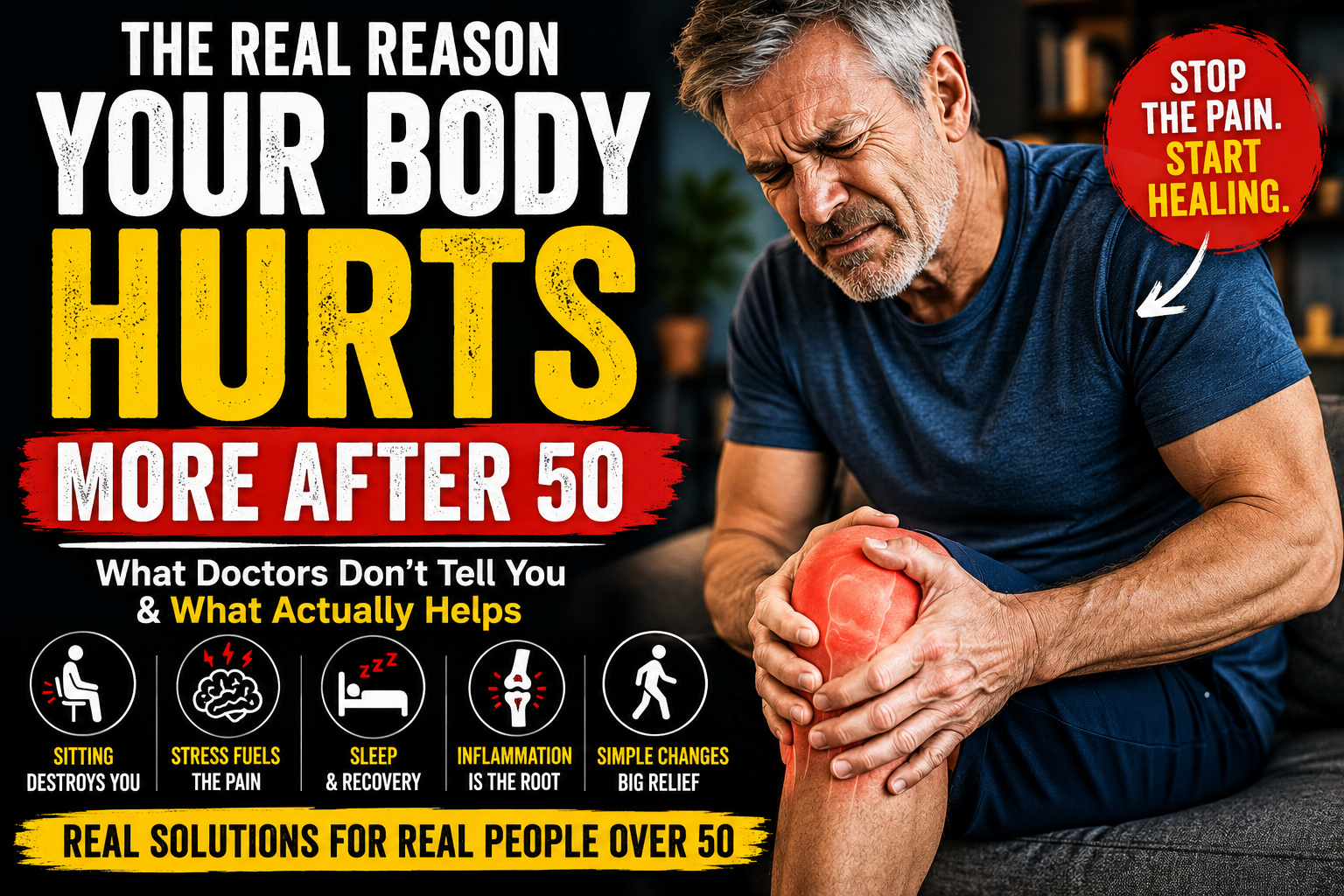
The Real Reason Your Body Hurts More After 50
You notice it getting harder to stand up after sitting too long.
Your shoulders stay tight all day.
Your lower back complains every morning.
Your knees crack when you walk upstairs.
At first you brush it off.
Maybe you slept wrong.
Maybe you worked too much.
Maybe it is just part of getting older.
But eventually the aches stop feeling temporary.
And what frustrates most people is this:
The pain often shows up even when there was no injury at all.
No accident.
No major fall.
No dramatic moment.
Just stiffness.
Tightness.
Inflammation.
And that constant feeling that your body never fully relaxes anymore.
Pain changes little things first.
You avoid stairs.
You sit down more often.
You stop walking as much.
You hesitate before lifting groceries.
You shift positions constantly trying to get comfortable.
And over time, those little changes slowly become your new normal.
Why Modern Life Is Wrecking Your Body
Your body was never designed for modern lifestyles.
Most people sit for hours every day staring at screens. Your hips tighten. Your glutes weaken. Your shoulders round forward. Your neck stays locked in the same position for far too long.
The human body thrives on movement.
But modern life rewards stillness.
Even people who exercise regularly can spend most of their day completely inactive. One workout cannot undo ten hours of sitting.
That is why so many people feel stiff, sore, and exhausted before the day even ends.
Why Painkillers Usually Do Not Fix the Problem
Most people start with pain medication because they want relief fast.
And for a short time, it helps.
But painkillers rarely solve the root issue.
You take something for back pain today.
Tomorrow the pain returns.
Next week you need another dose.
The cycle quietly repeats itself.
This is why so many people feel frustrated. They are treating symptoms while the real problem keeps getting worse underneath.
Pain is often your body’s warning system.
Masking it without changing anything else usually leads to bigger problems later.
Why Sitting Too Much Creates Daily Pain
Sitting is one of the biggest hidden causes of pain after 50.
When you stay seated for long periods:
* Hip flexors tighten
* Core muscles weaken
* Blood circulation slows
* Lower back pressure increases
* Posture collapses forward
Your body begins compensating everywhere.
Tight hips pull on the lower back.
Weak glutes force knees to work harder.
Rounded shoulders strain the neck.
Pain spreads because the body works as one connected system.
The scary part is this happens slowly enough that most people never notice until discomfort becomes constant.
The Hidden Stress Connection Most People Ignore
Stress does not just affect your mind.
It affects your muscles, joints, digestion, sleep, inflammation, and nervous system too.
When stress stays elevated for long periods, your body stays tense.
Shoulders tighten.
Jaw clenches.
Breathing becomes shallow.
Muscles stop fully relaxing.
Over time, your nervous system becomes hypersensitive.
Small discomforts begin feeling larger than they actually are.
Pain is exhausting because it follows you everywhere.
Many people spend years trying to fix physical pain without realizing their stress levels are constantly keeping the body in survival mode.
Why Sleep Problems Make Pain Worse After 50
Your body repairs itself during deep sleep.
That recovery process becomes even more important after 50.
But sleep quality often declines with age.
You wake up more easily.
You sleep lighter.
You recover slower.
Even one bad night increases inflammation and lowers pain tolerance the next day.
This is why aches often feel worse after poor sleep.
Your body simply never had enough time to fully recover.
Many people chase pain relief while ignoring the one thing their body desperately needs most: better sleep.
How Inflammation Quietly Fuels Everyday Pain
Inflammation is one of the biggest hidden drivers behind daily aches and pains.
Processed foods.
Sugar.
Stress.
Poor sleep.
Lack of movement.
All of these increase inflammation inside the body.
And inflammation affects everything.
Joints feel stiffer.
Muscles recover slower.
Pain lasts longer.
Energy levels crash harder.
This is why many people start feeling dramatically better after making small lifestyle changes like walking more, improving sleep, drinking water, and reducing processed foods.
The body wants to heal.
Most people simply overload it faster than it can recover.
Movement Helps More Than Most People Realize
Many people think they need intense workouts to feel better.
Usually they just need to stop staying still for six straight hours.
Small movement throughout the day matters more than most people think.
Walking.
Stretching.
Standing up regularly.
Taking stairs.
Simple bodyweight exercises.
These small actions improve circulation, mobility, joint lubrication, and muscle activation.
The body responds incredibly well to consistent movement.
Even five minutes every hour can noticeably reduce stiffness and pain over time.
Your Work Environment Might Be Causing Your Pain
Your desk setup matters more than most people realize.
A poorly positioned monitor strains the neck.
Bad chair support stresses the lower back.
Improper keyboard height creates shoulder tension.
Poor lighting contributes to headaches and eye strain.
And if you work from a laptop all day, the problem becomes even worse.
Most people are unknowingly spending years training their body into painful positions.
Small ergonomic improvements can create surprisingly large changes in daily comfort.
Simple Changes That Actually Help
You do not need a perfect lifestyle to feel better.
But small improvements add up fast.
Start here:
* Walk more during the day
* Stretch tight muscles daily
* Improve sleep quality
* Drink more water
* Eat fewer processed foods
* Strengthen your core and legs
* Reduce stress where possible
* Take movement breaks every hour
The goal is not perfection.
The goal is helping your body recover instead of constantly overwhelming it.
Final Thoughts
Most people assume pain after 50 is unavoidable.
It is not.
Yes, the body changes with age.
But many daily aches and pains are heavily connected to lifestyle, movement, stress, sleep, posture, inflammation, and recovery habits.
The good news is this means improvement is possible.
Sometimes the smallest daily changes create the biggest long-term relief.
And the earlier you start helping your body instead of fighting it, the better you tend to feel.
Related Posts:
- Why Your Energy Drops After 50
- Boost Energy After 50 Naturally
- Why Your Gut Is Draining Your Energy
- Morning Habits That Boost Energy After 50
Frequently Asked Questions
Why does my body hurt more after 50?
Muscle loss, inflammation, poor posture, stress, reduced movement, and slower recovery all contribute to increased aches and pains after 50.
Can sitting too much cause body pain?
Yes. Long periods of sitting tighten muscles, weaken the core and glutes, reduce circulation, and increase stress on the lower back, neck, and joints.
Does stress really affect physical pain?
Absolutely. Chronic stress keeps muscles tense, increases inflammation, disrupts sleep, and makes the nervous system more sensitive to pain signals.
What helps reduce inflammation naturally?
Walking, hydration, quality sleep, reducing processed foods, stress management, stretching, and strength training all help reduce inflammation naturally.
Can simple lifestyle changes really reduce pain?
Yes. Many people notice significant improvement from better movement habits, improved sleep, hydration, posture changes, and reduced inflammation.